
BIGBEAR
PHARMACEUTICALS
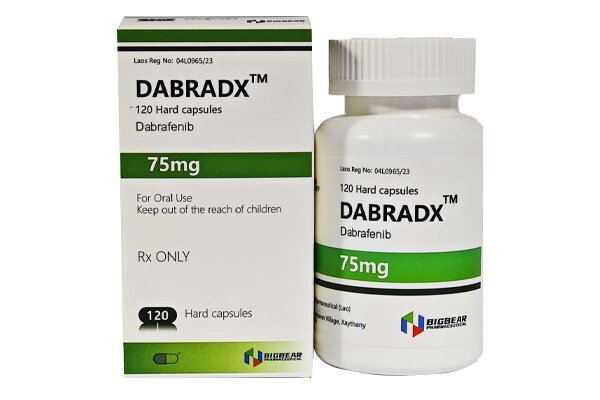

Dabrafenib is a highly selective BRAF serine-threonine kinase inhibitor and a precision targeted antineoplastic agent.

 AuthenticGuaranteeFast DeliveryPrivacy
 Dabrafenib can specifically inhibit the kinase activity of BRAF V600 mutant and block the abnormal proliferative MAPK signaling pathway, thereby suppressing tumor cell growth and proliferation.
Combination of dabrafenib and trametinib is indicated for the treatment of patients with BRAF V600 mutation-positive unresectable or metastatic melanoma.
Combination of dabrafenib and trametinib is indicated for the adjuvant treatment of patients with BRAF V600 mutation-positive Stage III melanoma following complete resection.
Combination of dabrafenib and trametinib is indicated for the treatment of patients with BRAF V600 mutation-positive metastatic non-small cell lung cancer.
This indication is granted conditional approval based on the objective response rate and duration of response from a Phase II clinical trial. Full approval of this indication is dependent on whether ongoing confirmatory clinical trials can verify the clinical benefit of dabrafenib mesylate capsules in combination with trametinib tablets.
Dabrafenib must be administered in medical institutions with experience in antineoplastic therapy.
Prior to treatment with dabrafenib in combination with trametinib, BRAF V600 mutation testing must be performed using a test method approved by the National Medical Products Administration.
Only patients confirmed as BRAF V600 mutation-positive may receive this product.
Combination therapy with this product and trametinib is not indicated for patients with
BRAF wild-type melanoma or non-small cell lung cancer.
The recommended dose of dabrafenib is 150 mg twice daily (equivalent to a total daily dose of 300 mg).
This product should be administered in combination with trametinib until disease progression or unacceptable toxicity occurs.
This product should be taken at least 1 hour before a meal or at least 2 hours after a meal, with doses approximately 12 hours apart.
It should be taken at the same time each day.
If a dose of this product is missed, it should not be taken if less than 6 hours remain until the next scheduled dose.
When this product is used in combination with trametinib, trametinib should be taken once daily at the same time each day, together with either the morning or evening dose of this product.
Do not open, crush, or break this product.
No dose adjustment is required in patients with mild hepatic impairment. Clinical data have not been obtained for patients with moderate to severe hepatic impairment, and the potential need for dose adjustment cannot be determined. Hepatic metabolism and biliary secretion are the main elimination pathways of dabrafenib mesylate and its metabolites, and exposure may increase in patients with moderate to severe hepatic impairment. This product should be used with caution in patients with moderate or severe hepatic impairment.
No dose adjustment is required in patients with mild or moderate renal impairment. Clinical data have not been obtained for patients with severe renal impairment, and the potential need for dose adjustment cannot be determined. This product should be used with caution in patients with severe renal impairment.
The safety and efficacy of this product in children and adolescents (<18 years old) have not been established. No clinical data are available.
No adjustment of the initial dose is required in patients aged 65 years and older.
The most common adverse reactions (≥20%) in patients treated with this product, listed in descending order of incidence, are:
hyperkeratosis, headache, pyrexia, arthralgia, papilloma, alopecia, and palmar-plantar erythrodysesthesia syndrome (PPES).
Hypersensitivity to dabrafenib or to any of the excipients.
Clinical data are limited regarding the use of this product in combination with trametinib in patients with disease progression following prior BRAF inhibitor therapy.
These data suggest reduced efficacy of the combination regimen in these patients. Therefore, alternative treatment options should be considered before initiating combination therapy in patients previously treated with a BRAF inhibitor.
The optimal treatment sequence following disease progression on BRAF inhibitor therapy has not been established.
Cutaneous Malignancies
In clinical trials of this product as monotherapy, cutaneous squamous cell carcinoma (cuSCC) and keratoacanthoma occurred in 11% and 4% of patients, respectively.
Basal cell carcinoma and new primary melanoma occurred in 4% and 1% of patients, respectively.
In clinical trials of this product in combination with trametinib, cuSCC (including keratoacanthoma) occurred in 2% of patients.
Basal cell carcinoma and new primary melanoma occurred in 3% and < 1% of patients, respectively.
Dermatologic evaluation should be performed prior to initiation of treatment with this product, every 2 months during treatment, and for 6 months following discontinuation.
Non‑Cutaneous Malignancies
Based on its mechanism of action, this product may activate RAS via mutation or other mechanisms, promoting the growth and progression of malignancies.
Non‑cutaneous malignancies occurred in 1% of patients in clinical trials of this product as monotherapy and in combination with trametinib.
Monitor patients receiving this product for signs and symptoms of non‑cutaneous malignancies.
Permanently discontinue this product in patients with RAS mutation‑positive non‑cutaneous malignancies.
In vitro studies demonstrate paradoxical activation of MAP kinase signaling and increased cell proliferation in BRAF wild‑type cells exposed to BRAF inhibitors.
Confirm BRAF V600 mutation status before initiating treatment with this product as monotherapy or in combination with trametinib.
For more detailed drug information, please consult the official package leaflet.
If any issues arise, please contact us immediately.
Email:haiousales@gmail.com

Copyright2024@ BIGBEAR All right reserved BIGBEAR


