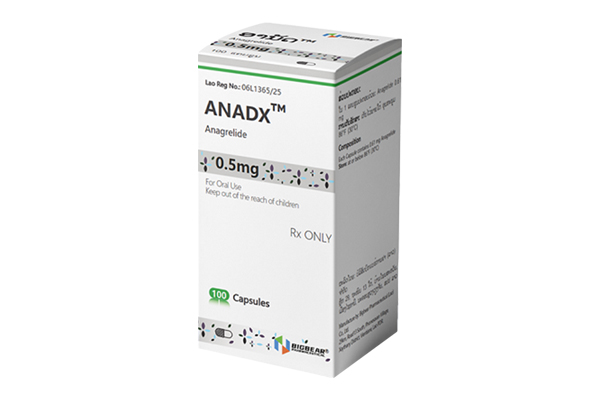
As a targeted drug focusing on the core pathological link of thrombocytosis, the Lao Big Bear version of Anagrelide not only continues the efficacy mechanism of the original drug, but also provides more accessible treatment guarantees for long-term patients with its affordable price and reliable preparation quality.
How much does the Lao Big Bear version of Anagrelide cost?
The Lao Big Bear version of Anagrelide is available in a specification of 0.5mg*100 capsules per bottle, with a price of approximately $75. The actual price may be affected by various factors, so the selling price shall prevail.
Possible side effects of Anagrelide
Like all medications, Anagrelide may cause side effects, but not every patient will experience them. Understanding possible side effects helps you identify problems in time and communicate with your doctor. Serious side effects (requiring immediate medical attention): Uncommon but possible include heart failure (manifested as shortness of breath, chest pain, leg swelling), severe arrhythmias (such as ventricular tachycardia, atrial fibrillation), pancreatitis (severe abdominal and back pain), gastrointestinal bleeding (vomiting blood, black or bloody stools), severe anemia or pancytopenia (leading to weakness, easy bruising, bleeding, or infection), pulmonary hypertension (shortness of breath, swollen ankles, blue lips or skin). Rare side effects include kidney failure (decreased or no urine output) and heart attack. Very common side effects (affecting more than 1 in 10 people): headache. Common side effects (affecting up to 1 in 10 people): dizziness, fatigue, fast heartbeat, palpitations, nausea, diarrhea, stomach pain, vomiting, anemia, edema, or rash. Uncommon side effects (affecting up to 1 in 100 people): weakness, high blood pressure, fainting, chills or fever, indigestion, loss of appetite, constipation, bruising or bleeding, weight loss, muscle or joint pain, numbness or tingling, insomnia, depression, confusion, dry mouth, memory loss, difficulty breathing, nosebleeds, lung infection, hair loss, itchy or discolored skin, impotence, elevated liver function indicators, etc. Rare side effects (affecting up to 1 in 1,000 people): bleeding gums, weight gain, angina, cardiomyopathy, pericardial effusion, coordination disorder, migraine, double vision, tinnitus, positional dizziness, increased nighttime urination, flu-like symptoms, drowsiness, colitis, gastritis, lung abnormalities, elevated creatinine, etc. Other reported side effects: arrhythmias, hepatitis (nausea, vomiting, yellowing of skin or eyes), pneumonia (fever, cough, wheezing), nephritis. Consult your doctor promptly if any discomfort occurs.
Storage methods and other important information for Anagrelide
Proper storage of medication not only ensures the efficacy of Anagrelide but also prevents the danger of accidental ingestion by children. Always keep Anagrelide out of the sight and reach of children, preferably in a locked medicine cabinet or high cupboard. Do not use Anagrelide after the expiration date indicated on the package or bottle label; the expiration date usually refers to the last day of that month, as expired medicine may become ineffective or toxic. Anagrelide does not require any special storage conditions, such as refrigeration; simply store at room temperature (15-30°C) in a dry, dark place. Keep the medicine in its original bottle, which usually contains a desiccant packet (to absorb moisture); do not remove or eat the desiccant. If your doctor changes your regimen and you no longer use Anagrelide, or if the medicine has expired, do not keep the remaining medicine unless specifically instructed by your doctor. When disposing of unused medicine, do not flush it down the toilet or discard it with household waste, as this may harm the environment. The correct approach is to consult your pharmacist or local drug take-back program to learn safe disposal methods, such as returning it to a hospital or pharmacy's expired medicine collection point. Other information: The active ingredient in Anagrelide is Anagrelide hydrochloride, with each capsule containing 0.5mg. Inactive ingredients include lactose monohydrate, anhydrous lactose, crospovidone, povidone, microcrystalline cellulose, magnesium stearate; the capsule shell is made of gelatin and titanium dioxide. It appears as an opaque white hard capsule printed with "S063" on the shell. Packaging: 100 capsules per bottle, containing a desiccant packet (inside the sealed container, do not remove). Please keep the package insert properly, and consult your doctor or pharmacist if you have any questions.