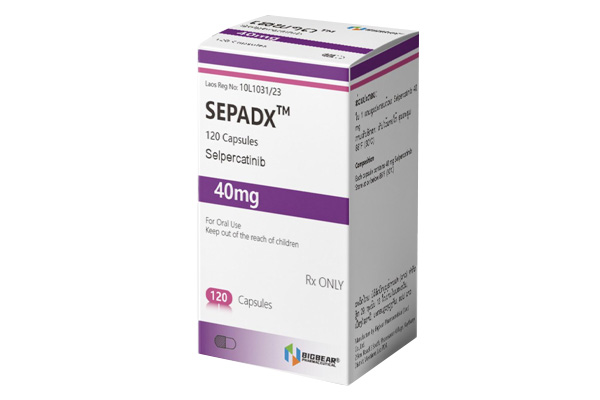
Selpercatinib is a highly selective RET kinase inhibitor that blocks tumor growth signaling by inhibiting abnormally activated RET proteins. Treatment decisions for specific populations must be made jointly by an oncologist in consultation with the appropriate specialists (obstetrics, pediatrics, hepatology, nephrology) and should never be assumed independently.
1. Pregnancy
Females of reproductive potential must verify pregnancy status prior to initiating treatment with Selpercatinib; inform your physician immediately if you become pregnant or suspect pregnancy during treatment. The use of this drug during pregnancy requires joint evaluation by obstetrics and oncology specialists.
2. Lactation
There are no data on the presence of Selpercatinib or its metabolites in human milk, the effects on the breastfed child, or the effects on milk production. Because of the potential for serious adverse reactions in a breastfed child, breastfeeding is not recommended during treatment.
3. Females and Males of Reproductive Potential (Contraception and Infertility)
Females of Reproductive Potential: Use effective contraception during treatment and for 1 week after the final dose; this drug may impair female fertility.
Males with Female Partners of Reproductive Potential: Use effective contraception during treatment and for 1 week after the final dose; this drug may impair male fertility.
4. Pediatric Use
The safety and effectiveness of Selpercatinib in pediatric patients 2 years of age and older have been established in three indications: medullary thyroid cancer, RET fusion-positive thyroid cancer, and other RET fusion-positive solid tumors. Safety and effectiveness in pediatric patients under 2 years of age for these indications have not been established. Safety and effectiveness for other indications in pediatric patients have not been established.
5. Geriatric Use
No overall differences in safety or effectiveness were observed between older and younger patients. Elderly patients require strict adherence to scheduled blood pressure and liver function monitoring due to a higher prevalence of baseline hypertension and decreased hepatic reserve.
6. Hepatic Impairment
Mild Hepatic Impairment (total bilirubin ≤ upper limit of normal [ULN] and AST > ULN, or total bilirubin > 1 to 1.5 times ULN and any AST): No dose adjustment is required.
Moderate Hepatic Impairment (total bilirubin > 1.5 to 3 times ULN and any AST): No dose adjustment is required, but close monitoring for adverse reactions is recommended.
Severe Hepatic Impairment (total bilirubin > 3 to 10 times ULN and any AST): Starting dose must be reduced—reduce 160 mg twice daily to 80 mg twice daily; reduce 120 mg twice daily to 80 mg twice daily; reduce 80 mg twice daily to 40 mg twice daily; reduce 40 mg three times daily to 40 mg twice daily.
7. Renal Impairment
No dose adjustment is required for patients with mild to severe renal impairment (estimated glomerular filtration rate [eGFR] 15 to 89 mL/min). Age (2 to 92 years) and sex have no clinically significant effect on pharmacokinetics.
The recommended dosage for patients with end-stage renal disease (ESRD) has not been established.