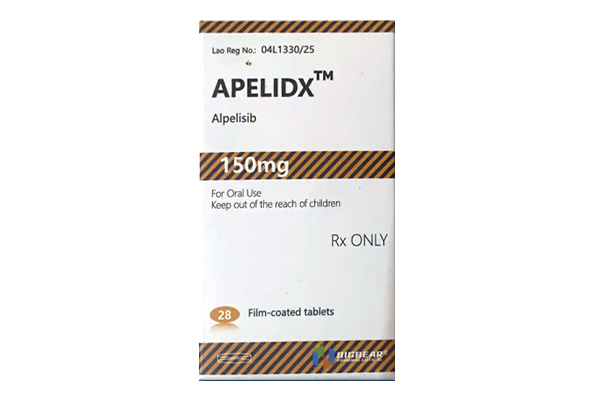
Dose Adjustments for Adverse Reactions in the Treatment of PIK3CA-Related Overgrowth Spectrum
1. Recommended Dose Reduction in Adult Patients
(1) First dose reduction: 125 mg once daily.
(2) Second dose reduction: 50 mg once daily (if not tolerated, discontinue).
2. Recommended Dose Reduction in Pediatric Patients
If the dose is 125 mg once daily, reduce to 50 mg once daily; patients unable to tolerate 50 mg daily should discontinue.
3. Skin Adverse Reactions
If severe cutaneous adverse reaction (SCAR) is confirmed, permanently discontinue. Patients who have experienced SCAR during treatment must not be rechallenged with this drug. Rash and SCARs in adults and children:
(1) Grade 1 (active skin toxicity involving BSA<10%): 28="" no="" dose="" adjustment="" unless="" scar="" is="" confirmed="" as="" the="" etiology.="" initiate="" topical="" corticosteroids="" and="" consider="" adding="" oral="" antihistamines="" for="" symptom="" control.="" if="" active="" rash="" does="" not="" improve="" within="" days="">
(2) Grade 2 (active skin toxicity involving BSA 10%–30%): No dose adjustment unless SCAR is confirmed as the etiology. Initiate or intensify topical corticosteroids and oral antihistamines. Consider low-dose systemic corticosteroids; may discontinue if rash improves to Grade ≤1 within 10 days. If SCAR is confirmed as the etiology, permanently discontinue.
(3) Grade 3 (active skin toxicity involving BSA ≥30%): Withhold treatment, initiate or intensify topical/systemic corticosteroids and antihistamines. If SCAR is confirmed as the etiology, permanently discontinue.
For adults with non‑SCAR Grade 3 rash: resume treatment at one dose level lower after improvement to Grade ≤1.
For children with non‑SCAR Grade 3 rash: after improvement to Grade ≤1, may either resume at 50 mg/day while continuing oral antihistamines, or permanently discontinue. If rash occurred while the patient was already receiving antihistamines and the antihistamine dose cannot be increased, or if Grade 3 or higher rash recurs, permanently discontinue.
(4) Grade 4 (any % BSA with recurrent infection requiring intravenous antibiotics; life‑threatening consequences – e.g., severe bullous, vesicular, or exfoliative dermatoses): Permanently discontinue treatment.
4. Hyperglycemia (Applicable to both adults and children, based only on fasting plasma glucose FPG / fasting blood glucose)
(1) Grade 1 (FPG > ULN to ≤160 mg/dL or > ULN to ≤8.9 mmol/L): No dose adjustment, but initiate or intensify oral antihyperglycemic therapy.
(2) Grade 2 (FPG >160 to ≤250 mg/dL or >8.9 to ≤13.9 mmol/L): No dose adjustment, but initiate or intensify oral antihyperglycemic therapy.
Adults: If FPG does not decrease within 21 days on appropriate antihyperglycemic therapy, reduce by one dose level, monitor FPG and follow FPG recommendations.
Children: If FPG does not decrease within 21 days on appropriate antihyperglycemic therapy, withhold until improvement to Grade ≤1, then resume at 50 mg, monitor FPG and follow FPG recommendations.
(3) Grade 3 (FPG >250 to ≤500 mg/dL or >13.9 to ≤27.8 mmol/L): Withhold treatment. Initiate or intensify oral antihyperglycemic therapy and consider adding other antihyperglycemic agents for 1–2 days until FPG improves. Give intravenous fluids and consider intervention for electrolyte imbalance/ketoacidosis/hyperosmolar state.
Adults: If FPG decreases to ≤160 mg/dL or ≤8.9 mmol/L within 3–5 days on antihyperglycemic therapy, resume treatment at one dose level lower. If FPG does not decrease within 3–5 days, consult a hyperglycemia specialist. If FPG does not decrease within 21 days on antihyperglycemic therapy (*2), permanently discontinue.
Children: If FPG decreases to ≤160 mg/dL or ≤8.9 mmol/L within 3–5 days on antihyperglycemic therapy, resume treatment at 50 mg/day. If FPG does not decrease within 3–5 days, consult a hyperglycemia specialist to determine whether to resume or discontinue. If FPG does not decrease within 21 days, permanently discontinue. If Grade 3 or higher hyperglycemia recurs, consider permanent discontinuation.
(4) Grade 4 (FPG ≥500 mg/dL or ≥27.8 mmol/L): Withhold treatment. Initiate or intensify oral antihyperglycemic therapy. Give intravenous fluids and consider intervention for electrolyte imbalance/ketoacidosis/hyperosmolar state. Recheck FPG within 24 hours as clinically indicated.
If FPG decreases to ≤500 mg/dL (≤27.8 mmol/L), follow the specific recommendations for Grade 3 hyperglycemia.
If FPG remains confirmed >500 mg/dL (>27.8 mmol/L), permanently discontinue treatment.
5. Pneumonitis (Adults and children)
(1) Any grade: If pneumonitis is suspected, withhold treatment.
(2) If pneumonitis is confirmed, permanently discontinue.
6. Diarrhea (Adults and children – consider gastroenterology consultation for pediatric patients)
(1) Grade 1: No adjustment, initiate appropriate medical therapy and monitor.
(2) Grade 2: Withhold until improvement to Grade ≤1, then resume at the same dose. Initiate and intensify appropriate medical therapy and monitor.
Adults: If Grade 2 or higher diarrhea recurs, withhold until improvement to Grade ≤1, then resume at one dose level lower.
Children: If Grade 2 or higher diarrhea recurs, withhold until improvement to Grade ≤1, then resume at 50 mg.
(3) Grade 3: Withhold until improvement to Grade ≤1. Initiate and intensify appropriate medical therapy and monitor.
Adults: Once improved to Grade ≤1, resume at one dose level lower.
Children: Once improved to Grade ≤1, may either resume at 50 mg or permanently discontinue. If Grade 3 or higher diarrhea recurs, consider permanent discontinuation.
(4) Grade 4: Permanently discontinue.
7. Pancreatitis
(1) Grade 2
Withhold until improvement to < Grade 2.
Adults: Resume at one dose level lower (only one dose reduction allowed). If pancreatitis recurs, permanently discontinue.
Children: Resume at 50 mg/day. Permanently discontinue. (Note: original text is contradictory; translation follows the original wording "Resume at 50 mg/day. Permanently discontinue." – clinical practice should adhere to the prescribing information and physician guidance.)
(2) Grade 3
Adults: Withhold until improvement to < Grade 2. Resume at one dose level lower (only one dose reduction allowed). If pancreatitis recurs, permanently discontinue.
Children: Permanently discontinue.
(3) Grade 4
Permanently discontinue.
8. Other Adverse Reactions
(1) Grade 1 or 2: No dose adjustment, but initiate appropriate medical therapy and monitor as clinically indicated.
(2) Grade 3: Withhold until improvement to Grade ≤1. Initiate or intensify medical therapy and monitor closely.
Adults: Once improved, resume at one dose level lower.
Children: Once improved, resume at 50 mg/day or permanently discontinue.
If the adverse reaction recurs at Grade 3 or higher, consider permanent discontinuation. Consider consultation with a specialist in the relevant adverse reaction area.
(3) Grade 4: Permanently discontinue.