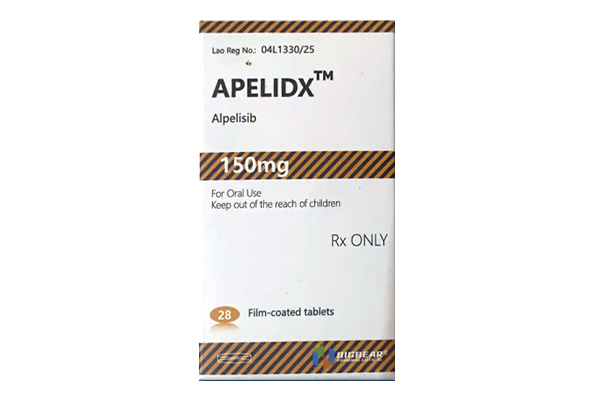
Before starting Alpelisib treatment, please inform your doctor in a timely manner about all medications you are currently taking to minimize potential interactions between drugs.
Drug Interactions of Alpelisib
1. Strong CYP3A4 Inducers: Avoid Co-administration.
Avoid concomitant use with strong CYP3A4 inducers and consider switching to an alternative drug that has no or minimal CYP3A4 inducing activity.
Common strong CYP3A4 inducers include rifampin, carbamazepine, phenytoin, and St. John's wort (Hypericum perforatum). If you are currently taking any of these, or if your doctor intends to prescribe a new one, inform them in advance.
2. BCRP Inhibitors: Avoid Use.
Avoid the use of Breast Cancer Resistance Protein (BCRP) inhibitors in patients receiving Alpelisib. If an alternative medication cannot be found, closely monitor for increased adverse reactions, as these agents may increase Alpelisib plasma concentrations, thereby escalating the risk of toxicity.
3. Antacids and Acid-Reducing Agents: Co-administration is permissible, but with specific requirements.
Alpelisib should be taken with food, and it can be used in combination with antacids—the effect of food on Alpelisib solubility is more significant than the effect of gastric pH. However, acid-reducing agents can still reduce absorption: co-administration of ranitidine (an H2 receptor antagonist) with a single 300 mg dose of Alpelisib under low-fat, low-calorie meal conditions decreased the area under the curve (AUC) by an average of 21% and peak concentration (Cmax) by 36%; under fasting conditions, AUC decreased by an average of 30% and Cmax by 51%.
When taken with food, the reduction in absorption caused by acid-reducing agents is considerably less pronounced. If you are on long-term treatment with proton pump inhibitors (PPIs) or H2 receptor antagonists, proactively inform your doctor so they can decide whether adjustments are necessary.
4. Combinations Requiring No Dosage Adjustments.
When Alpelisib is co-administered with midazolam (a CYP3A4 substrate), repaglinide (a CYP2C8 substrate), warfarin (a CYP2C9 substrate), omeprazole (a CYP2C19 substrate), or bupropion (a CYP2B6 substrate), no clinically meaningful pharmacokinetic interactions were observed. Similarly, no clinically significant pharmacokinetic differences were noted when combined with everolimus (a CYP3A4 and P-glycoprotein substrate). Co-administration with ketoconazole, a strong CYP3A4 inhibitor, is expected to increase the AUC of Alpelisib by no more than 37%.
Information You Must Proactively Tell Your Doctor Before Taking the Medication
1. Whether you have a history of diabetes or elevated blood glucose levels. Patients with type 1 diabetes and uncontrolled type 2 diabetes were excluded from the SOLAR-1 trial, and the safety of Alpelisib in these populations has not been established. Patients with a history of diabetes may require intensified glucose-lowering therapy.
2. Whether you have a history of skin rashes, or blistering/peeling of the lips, eyes, mouth, or skin. This is essential for assessing the risk of severe cutaneous adverse reactions.
3. All medications you are currently taking, including prescription drugs, over-the-counter (OTC) medications, vitamins, and herbal products. The prescribing information specifically advises keeping a list of all your medications to show your doctor or pharmacist whenever you receive a new drug.
4. Whether you are pregnant, breastfeeding, or planning to become pregnant.