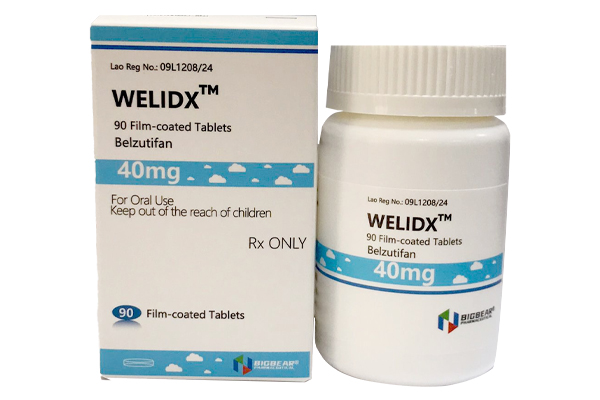
Belzutifan is a prescription medication; the dosage, duration of treatment, and decision on whether to continue medication must be determined by a specialist based on imaging evaluations and tolerability.
Usage Guidelines
1. Recommended Dosage
120 mg daily. Write "same time every day, swallow whole, make up missed dose on the same day, do not make up for vomiting" directly on the bottle. It can be taken on an empty stomach or with food, swallowed whole. Do not chew, crush, or break apart.
2. Desiccant
There are 2 desiccant canisters in the bottle; do not eat them.
3. Storage Location
Store in a cool, dry place at 20°C to 25°C, with short excursions permitted between 15°C and 30°C. Do not refrigerate, and do not store in the bathroom or on the balcony. Keep out of reach of children.
Medication Precautions
1. Missed dose: Take the missed dose as soon as possible on the same day, and resume the regular schedule the next day. Do not take extra tablets.
2. Vomiting: If vomiting occurs at any time after taking the dose, do not make up this dose; take the next dose at the regular time the following day.
3. Do not reduce the dose on your own: The dose reduction steps are fixed at 120 → 80 → 40 mg, reducing by 1 tablet each time; the third dose reduction means permanent discontinuation. Please strictly follow medical advice for dose reductions and never reduce the dosage on your own.
Consult a Doctor Immediately
1. Respiratory-related: Feeling short of breath even at rest; bluish lips or fingernails; noticeable shortness of breath after climbing just one flight of stairs.
2. Anemia-related: Unusual paleness, extreme sensitivity to cold, rapid heartbeat, dizziness, or significantly decreased concentration.
3. Cardiac-related (especially when combined with lenvatinib): Swelling in lower limbs, rapid weight gain in a short period, worsening shortness of breath when lying flat at night, chest pain, palpitations, or signs of impending syncope (fainting).
4. Bleeding-related: Vomiting blood, black or bloody stools, unexplained persistent bleeding, or large areas of bruising.
5. Digestive-related: Diarrhea more than 4 to 6 times a day, persistent vomiting resulting in inability to eat or drink, or severe abdominal pain.
6. Vision-related: Newly occurring blurred vision, decreased vision, or abnormal visual fields.
7. Infection-related: Fever accompanied by chills, worsening cough, or darkening sputum color.
Frequently Asked Questions
1. Is it ineffective if there is no response after taking it?
The primary benefit of Belzutifan is delaying disease progression, not making the tumor disappear immediately. The median time to response is 8 months for VHL-associated renal cell carcinoma and 11.0 months for PPGL. You cannot expect to judge efficacy after taking it for only a few days.
2. Should the drug be stopped if anemia occurs?
Do not decide on your own. The package insert provides clear dose interruption thresholds for anemia, categorized by indication: for the adjuvant treatment of ccRCC, withhold when hemoglobin is below 9 g/dL or if a blood transfusion is required; for all other indications, withhold when hemoglobin is below 8 g/dL or if a blood transfusion is required. After recovery, the doctor will decide whether to resume at the same dose or a reduced dose.
3. Can I switch to a cheaper version?
If you are already taking the drug, switching sources during treatment is not recommended, as fluctuations in plasma drug concentration will make the interpretation of anemia and hypoxia more difficult.